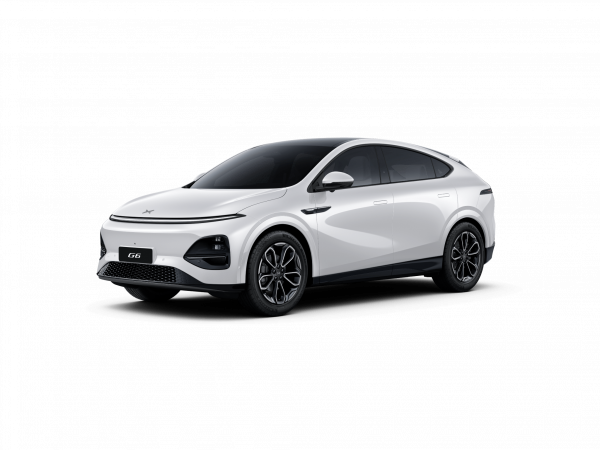
The XPENG G6 offers a practical alternative to a petrol or diesel SUV because it combines up to 525 km of WLTP range, 451 kW DC charging and a 12-minute 10–80% charge in the Australian-market RWD Long Range model. Its 80.8 kWh LFP battery powers a 218 kW rear motor producing 440 Nm, while official energy consumption is 17.9 kWh/100 km. A 571-litre boot, 1,374 litres with the rear seats folded, 475 kg payload and five-seat cabin keep it usable as a family SUV rather than treating electrification as the main selling point.
A traditional SUV is still convenient when fuel stations are plentiful, but the time gap between refuelling and charging has narrowed. XPENG rates the G6 Long Range at up to 451 kW DC, allowing 10–80% charging in about 12 minutes under suitable conditions. That 70% battery window equals about 56.6 kWh of the 80.8 kWh gross capacity, enough energy for several hundred kilometres of rated driving rather than a short urban top-up.
Charging hardware outside the vehicle still matters. A 150 kW public charger cannot supply 451 kW simply because the G6 can accept it, while battery temperature and state of charge also affect the charging curve. XPENG's Australian product information reports that the RWD Long Range can add up to 427 km of indicated range in 15 minutes in internal testing, providing a more useful reference for motorway stops than peak power alone.
A 12-minute 10–80% stop is only four minutes longer than an eight-minute fuel-and-payment stop, although real charging time depends on the charger, battery temperature and available power.
The long-distance case is supported by efficiency rather than battery size alone. The Australian RWD Long Range is rated at 17.9 kWh/100 km on 20-inch wheels and 525 km WLTP. The Standard Range uses a smaller 68.5 kWh LFP battery, while current international specifications place G6 consumption at roughly 16.9–18.4 kWh/100 km depending on version. A Performance model therefore uses more electricity, just as a higher-output petrol SUV normally uses more fuel.
The differences are easier to see when the main figures are placed beside normal SUV requirements:
| G6 specification | Published figure | Practical relevance |
|---|---|---|
| Long Range battery | 80.8 kWh gross | Supports 500+ km rated travel |
| WLTP range | 525 km on Australian R20 specification | Suitable for intercity use |
| DC charging | Up to 451 kW | 10–80% in about 12 minutes |
| AC charging | 11 kW | 5–100% in about 9.2 hours |
| Motor output | 218 kW / 440 Nm | Strong motorway acceleration |
| Boot space | 571 L | Comparable with family SUV use |
| Rear seats folded | 1,374 L | More room for large cargo |
| Payload | 475 kg | Accounts for people and luggage |
Those figures also show why an elctric suv should be judged by charging speed, usable space and consumption together rather than range alone. A vehicle with a very large battery can still be inconvenient if it charges slowly, while a smaller pack can work well when energy use is low and charging stops are short. The 2026 Australian G6 specification combines all three measures instead of relying on a single headline number.
Performance also changes the comparison with combustion SUVs. The RWD Long Range produces 218 kW and 440 Nm and reaches 100 km/h in 6.7 seconds. Buyers wanting more acceleration can choose the AWD Performance version, rated at 358 kW with a 0–100 km/h time of about 4.13 seconds. The extra performance comes with higher rated consumption, around 18.4 kWh/100 km in published European specifications.
Electric motors deliver torque without waiting for an automatic gearbox to downshift, so overtaking response is mechanically simpler. The G6 also has a 202 km/h published top speed, front double-wishbone suspension and ventilated disc brakes at both ends. A 0.248 drag coefficient helps reduce aerodynamic resistance, which becomes increasingly important above roughly 80 km/h because aerodynamic power demand rises rapidly as speed increases.
Interior packaging matters more during everyday ownership than a 0–100 km/h result. The G6 measures roughly 4.76 metres long and 1.92 metres wide, yet provides 571 litres of luggage capacity behind the rear seats. Folding the second row expands storage to 1,374 litres, an increase of about 141%. Five people can therefore travel without giving up the cargo flexibility expected from a medium family SUV.
The 475 kg payload figure deserves attention when comparing family vehicles. Four adults weighing 75 kg each use 300 kg of that allowance, leaving roughly 175 kg for bags and other items before reaching the published payload figure. That is more useful information for a holiday trip than cabin marketing language, particularly when several passengers, child seats and luggage need to be carried at the same time.
Cabin equipment also reduces the number of separate devices owners need to manage. Australian specification information lists a 10.25-inch digital instrument cluster and a 15.6-inch central display, with Apple CarPlay, Android Auto, navigation, app functions and over-the-air software support. Seven airbags are listed, together with tyre-pressure monitoring, rear ISOFIX mounting points and multiple active assistance functions.
Those assistance systems include adaptive cruise control, lane centring, lane-change assistance, forward-collision warning, automatic emergency braking, blind-spot detection and rear cross-traffic alert. Surround-view cameras and automated parking functions address low-speed manoeuvring, where a vehicle measuring almost 1.92 metres wide can otherwise demand more attention in older car parks. The published turning radius is 5.8 metres.
Technology does not remove the driver's responsibility. Assistance functions depend on cameras, sensors, road markings, weather and operating conditions, so a 2026 vehicle still requires continuous driver supervision.
Battery chemistry adds another ownership difference. Current G6 versions use lithium iron phosphate, or LFP, batteries: 68.5 kWh in Standard Range form and 80.8 kWh in Long Range and Performance versions. XPENG moved the refreshed G6 range to LFP chemistry in 2025, replacing earlier battery configurations. LFP batteries generally offer good thermal stability and cycle life, while avoiding nickel and cobalt in the cathode chemistry.
The battery is paired with an 800V electrical architecture rather than the roughly 400V systems common in many earlier EVs. Higher voltage allows a given amount of electrical power to be transferred at lower current, reducing resistive losses and helping support high charging rates. XPENG describes the pack as 5C-capable; the commercial result is more useful than the label itself: up to 451 kW peak DC input and a claimed 12-minute 10–80% interval.
Home charging produces a different pattern. The Long Range model supports 11 kW AC charging and lists approximately 9.2 hours for a 5–100% session. Most owners would not arrive home at 5% every evening, so a daily 20% replenishment represents only about 16 kWh of an 80.8 kWh battery. At an 11 kW supply, the electrical energy itself could be delivered in well under two hours before normal charging losses are considered.
Running cost depends heavily on local electricity and fuel prices, so a fixed saving percentage would be misleading. The useful calculation starts with the G6's official 17.9 kWh/100 km consumption. At an illustrative residential electricity price of A$0.30/kWh, 100 km uses about A$5.37 of electricity before charging losses; at A$0.50/kWh, the same rated energy costs A$8.95. Public rapid-charging rates can be higher, reducing the difference from petrol.
Mechanical servicing is different as well. An electric motor does not require engine-oil changes, spark plugs, fuel injectors, an exhaust system or a multi-speed combustion-engine transmission. Tires, suspension, brake fluid, cabin filters and cooling systems still require attention. Regenerative braking can handle part of normal deceleration, reducing friction-brake use, although a vehicle weighing about 2,115 kg in Long Range form still places substantial demands on tires and suspension components.
Weight also explains why efficiency deserves as much attention as acceleration. The Long Range has a listed gross vehicle mass of 2,590 kg and kerb weight of 2,115 kg. Despite that mass, its official consumption remains 17.9 kWh/100 km. Moving from the RWD Long Range to a 358 kW AWD version adds performance but raises official consumption to about 18.4 kWh/100 km, roughly a 2.8% increase based on published figures.
Practical use can extend beyond passengers and luggage. XPENG lists Vehicle-to-Load output of up to 6 kW for the Australian Long Range configuration, allowing the traction battery to supply external electrical equipment where supported. Six kilowatts is enough capacity for several ordinary appliances operating together, although actual permitted use should follow the vehicle manual and local electrical requirements.
Towing requires more caution. Published international G6 specifications list up to 1,500 kg for a braked trailer and 750 kg without trailer brakes, but XPENG has also issued a service campaign concerning tow bars on a limited number of G6 and G9 vehicles and advised affected owners not to use the tow bar until updated components are available. Buyers intending to tow should confirm the status of their specific vehicle before relying on the rated figure.
Range should be treated in the same practical way. A 525 km WLTP rating is produced under a standardised procedure, not continuous motorway travel at 110 km/h with five passengers and climate control running. XPENG states that actual distance varies with speed, outside temperature, passenger count, load, terrain, air-conditioning use and vehicle condition. A 20% reduction from the rated figure would produce about 420 km; a 30% reduction would produce about 368 km.
Cold or very hot weather also changes consumption because the battery and cabin need thermal management. Petrol SUVs lose efficiency under difficult conditions too, but refuelling infrastructure can make the loss less noticeable. The G6 compensates mainly through charging speed: even when usable motorway range falls below the WLTP figure, a 10–80% stop can remain short when a sufficiently powerful charger is available.
For buyers comparing five-year ownership rather than one road trip, warranty and local support deserve equal attention. Published European G6 material lists a 7-year/160,000 km vehicle warranty in some markets, while warranty terms can differ by country. In Australia, XPENG stated in July 2026 that it planned up to 50 sales outlets and three flagship experience centres as its local network expanded, so buyers should verify current coverage near their postcode before purchase.